


























Your B2B website should be your best salesperson. In this guide, we walk through the exact process we use to build B2B websites that attract the right visitors, convert them into qualified leads, and keep improving over time.
TL;DR
- High-performing B2B websites begin with measurable pipeline goals, audience research, clear positioning, and technology that marketing teams can manage independently.
- Structure every major page around one conversion goal, a logical next step, and content that proactively addresses buyer objections.
- Combine search-focused resources, persuasive case studies, custom brand assets, contextual social proof, and specific CTAs to educate and convert buyers.
- Treat the website as an evolving product by tracking conversions and behavior, fixing friction, testing hypotheses, and conducting quarterly content and SEO reviews.
Most B2B websites do not fail because they look bad. They fail because they were built without a clear plan for how a visitor becomes a client. To build a high-performing B2B website in 2026 you need:
- Start with strategy before design. Define what success means and what the site needs to change in your pipeline.
- Build the sitemap with a clear education to conversion path. Give every key page one job and a clear next step for the buyer.
- Pick tech your marketing team can run. If every change needs a dev ticket, the site will slow down and quickly become outdated.
- Use reusable components. Modular blocks keep the site consistent and let you ship new pages fast.
- Show proof where decisions happen. Build trust through impact numbers, client logos, and success stories on the pages where buyers judge you.
- Track, learn, and iterate after launch. A high-performing B2B site should be treated like a living organism that improves over time, not a one-time project.
Why most B2B websites fail to generate leads
If your website was a sales rep, would you keep them? Do they get to the point, answer the questions, and guide the buyer to the next step, or do they ramble about themselves until the buyer goes back to Google and choose a competitor?
We’ve built and designed over 100 B2B tech websites at Grafit, so we’ve seen what makes a website sell the story and what not. The problem is that most B2B brands still treat a redesign of their website like a visual upgrade. They spend months and a big money, launch a site that looks cool, do the round of high fives and… buyers still bounce. Why?
It is not because your design is ugly or the copy is bad. That happens because the project started with the wrong question. Teams ask "how do we make this look modern?" when they should be asking "how do we make this convert better?”
What makes a high-performing B2B website in 2026
The average B2B website in 2026 converts between 2 and 4 percent of visitors into leads. B2B SaaS companies sit closer to 1 percent. If your site is below 2 percent, a structured CRO audit typically reveals where the friction sits - usually in messaging, hero structure, or trust signals before the user reaches your CTA.
Okay, maybe that one-point lift does not sound like much. But in a lot of B2B funnels, that small jump can cut CAC by roughly 15–30% (depending on where you start and how well leads turn into customers).
When the strategic design is done by the right web development agency, the website does 4 things at once:
- It attracts the right visitors through organic search
- Converts them into leads
- Accelerates the sales cycle by answering objections before a call
- Compounds in value because it's built to improve
Here’s the phase-by-phase process we follow to get every website we work on there:
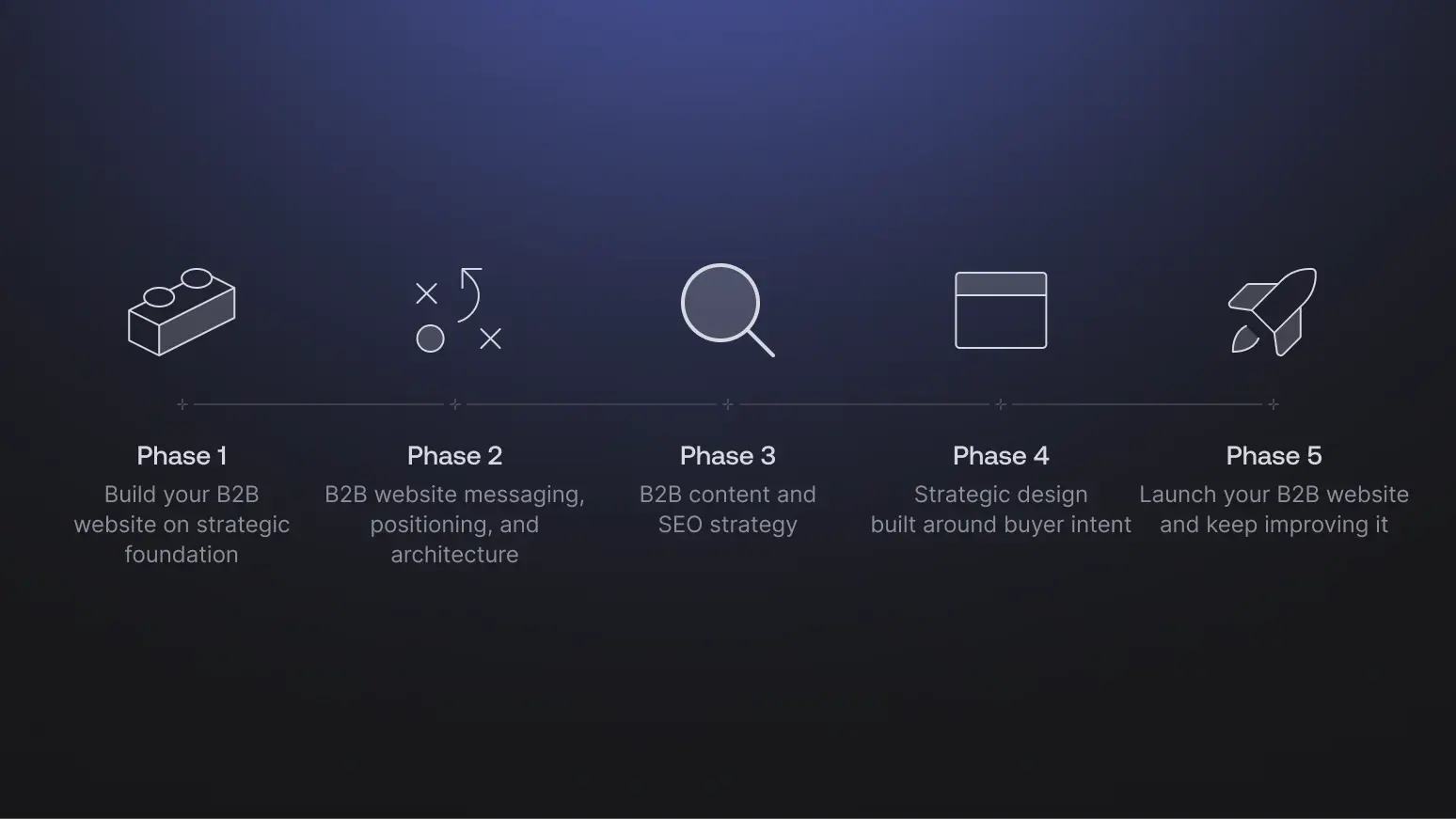
Phase 1: B2B website foundation: strategy, goals, and partner selection
Most redesign projects jump straight to visuals because mockups feel like progress. The companies that get real results invest the first few weeks on strategy, research, and goal-setting. This phase sets the direction for everything that follows.
How to define B2B website goals before design
This sounds obvious, and yet it is the step that gets skipped most often. Leadership says "we need a new website" and five minutes later someone opens Figma and starts sketching wireframes.
Before you brief a designer or talk to an agency, answer four questions:
- Where are you right now? Look at your current conversion rate, your highest-traffic pages, and the feedback you keep hearing from prospects. If you don't have this data, that is your first problem to solve.
- What is broken? Is it unclear messaging? A bad mobile experience? Pages that load so slowly visitors leave before they read the headline? Instead of saying "it looks outdated," name the specific problems.
- What resources do you have? Budget range, realistic timeline, internal team capacity, and existing content. A B2B website design scope that ignores constraints is wishful thinking.
- What does success look like in numbers? "Increase demo requests by 40%." "Cut the sales cycle by two weeks." "Grow organic traffic by 3x in six months." If you can't put a number on it, you can't measure it.
Choose the right technology and B2B web design partner
Before you touch design, you’re about to make two decisions that will quietly determine whether this B2B website design becomes a growth asset or an expensive rebrand. It’s your technology stack and your design partner.
How you decide on tools?
Technology decisions in B2B web design tend to get made for the wrong reasons. Someone on the team likes a particular tool or the CTO insists on a custom build because "we might need it someday."
The only question that matters is whether your marketing team can make changes without filing a dev ticket every time. This is why most of our Webflow development work is for B2B SaaS companies with 50 to 1000 employees - the no-code CMS gives marketing teams independence without the dev overhead of a custom build
How to evaluate an agency?
Pay attention to how the conversation starts. If an agency pitches design concepts before asking about your analytics, your conversion rates, or your sales process, walk away. The best partners start with discovery. They want to see your data before they show you their portfolio.
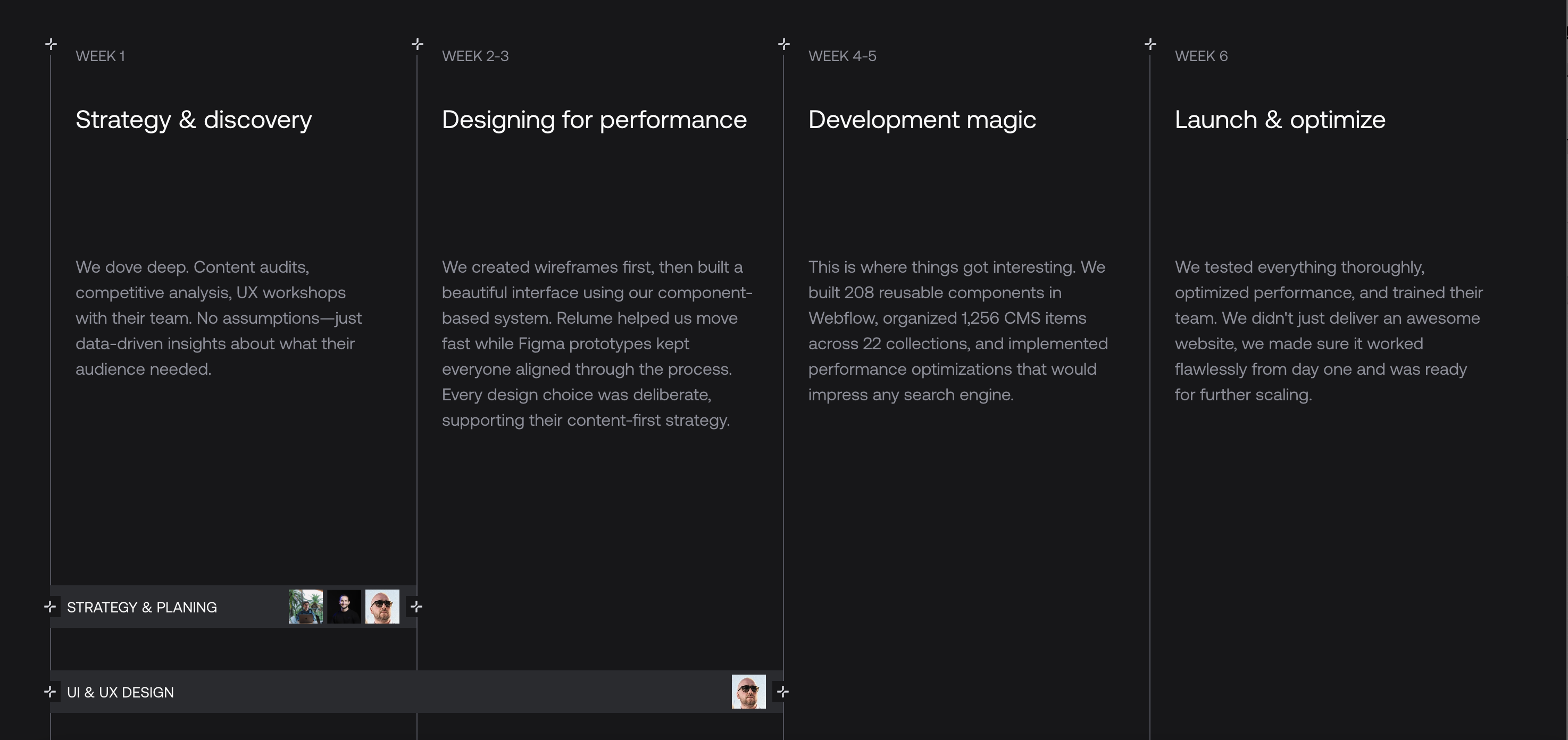
When we worked with Callstack, we spent full week analyzing their traffic patterns and conversion paths before anyone touched a wireframe. That investment in understanding the problem first led to a 66% increase in organic traffic within 10 days of launch.
Research competitors and benchmark B2B websites
Competitive research for a B2B website design is not about copying someone else's homepage. It's about understanding what the market expects and finding the gaps where you can stand out. Here is how you do this:
- Pick 10 to 15 websites
Include direct competitors, industry leaders, and a few brands outside your space that are recognized for great B2B web design.
- Build a simple comparison spreadsheet with:
- What they lead with on the homepage?
- How their navigation works?
- Where they place social proof?
- What their conversion paths look like?
- How they handle mobile?
- Break down what works
- Why does this work for their audience?
- How does it address user objections?
- Can we execute this better?
- Identify gaps
The most useful thing you'll find is what competitors fail to address. If none of your competitors have an ROI calculator, or industry-specific landing pages, those gaps become your opportunities.
Phase 2: B2B website messaging and information architecture
Strategy without structure goes nowhere. This phase takes everything from your research and turns it into a messaging framework and sitemap that your B2B website design team can build from.
B2B website messaging and positioning framework
A homepage wireframe without messaging behind it is just a pretty layout with Lorem ipsum.
- Get your messaging right. One-sentence value proposition a stranger gets in five seconds. Three to four B2B differentiators. Real results that back up claims.
- Clarify positioning. Who you're for and who you're NOT for.? What category do you compete in? Why should someone pick you? If your team can't agree without a 45-minute argument, you're not ready to design.
- Build buyer personas that are useful. Not the fluffy "Marketing Mary likes Pilates and reads Harvard Business Review" kind. Map out the specific and what information they need at each stage of the buying process.
- Map objections to pages. Every B2B buyer has reasons not to buy. Your website needs to address each one proactively:
How to structure a B2B website sitemap for conversion
Your sitemap is the architecture of your entire sales argument. The way you organize determines how prospects experience your company, and whether they reach the point of requesting a demo or clicking away.
This is how a strong B2B website architecture looks like.
For every major page, define four things:
- The primary conversion goal (what you most want visitors to do).
- The secondary goal (the backup action).
- The next logical step in the buyer journey.
- The fallback path for visitors who aren't ready to convert yet.
Before you build anything, show your proposed sitemap to 5 to 10 people in your target audience. Ask them "if you wanted to learn about X, where would you click?" If they can't find it intuitively, your architecture needs work.
Phase 3: B2B website content strategy and SEO best practices
The decisions you make now about page structure, headings, and internal linking will determine whether your B2B website attracts organic traffic or sits invisible in search results.
Plan B2B content that moves people through the funnel
Your B2B website needs three types of content: MOFU TOFU and BOFU working together.
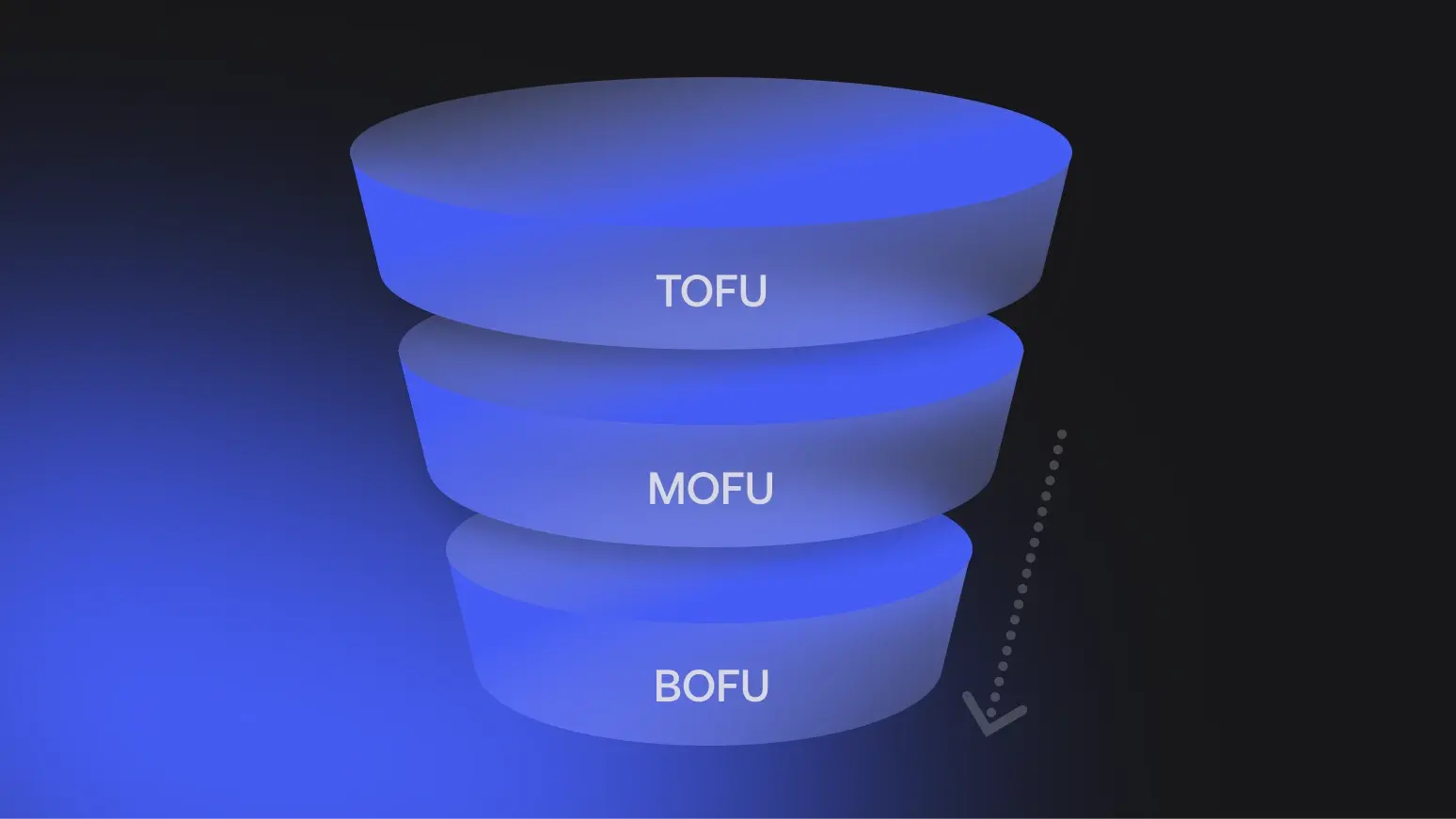
- Service and product pages follow a problem-solution-proof structure. Every service page should link to at least two related case studies and include a clear CTA.
- Resource content (blog posts, guides, reports) serves your SEO and content strategy by attracting organic traffic at the top of the funnel. Each piece should target a specific search query and guide readers toward your product or service pages through internal linking.
- Case studies are your most persuasive content asset. B2B buyers trust other buyers more than they trust your marketing copy. See how we structure case studies at Grafit with specific numbers, clear before-and-after comparisons, and the actual process we followed.
Monitor SEO and AI search visibility
B2B SEO strategy is not something you set up once and forget. And in 2026, you're not just tracking Google rankings. You're tracking whether AI tools cite your content too. What to monitor monthly:
- SEO search tools. Use Ahrefs and Semrush to find high-intent keywords, keep the technical basics clean (titles, meta descriptions, alt text, Core Web Vitals). Then publish content that answers real buyer questions, build quality backlinks through outreach, and track rankings, traffic, and conversions in tools like Google Search Console.
- AI search tools. Tools like GetMentioned track how your brand shows up across ChatGPT, Perplexity, and Gemini in real time. You can see which prompts mention you, which cite your competitors instead, and which source URLs drive the recommendations.If you want to do it manually first, search your target queries in each AI tool and note whether your content appears.
Phase 4: B2B website design best practices for buyer intent
This is where your strategy becomes visible. Everything you have defined so far, your messaging, your site structure, and your content plan, now turns into pages.
Invest in B2B brand assets that set you apart
Stock photography is the fastest way to make a B2B website look generic. When your hero image is the same person-at-laptop photo that appears on 400 other SaaS websites, you've just told every visitor that you're interchangeable.
The assets that actually build trust and differentiation are custom illustrations that clarify products, motion deigns that turn complex SaaS products into engaging stories, or 3D designs that guide buyers’s attention to the right places.
AI-generated imagery can work for abstract concepts if it’s prompted well, but it won’t replace real product visuals. People spot “AI vibes” fast, and it can make the whole page feel less trustworthy. The investment in custom assets pays for itself because better visuals mean higher engagement, which means better SEO signals, which means more organic traffic.
Build your B2B website with reusable components
The smartest thing you can do during a B2B website build is invest in a component library which is a set of reusable design blocks:
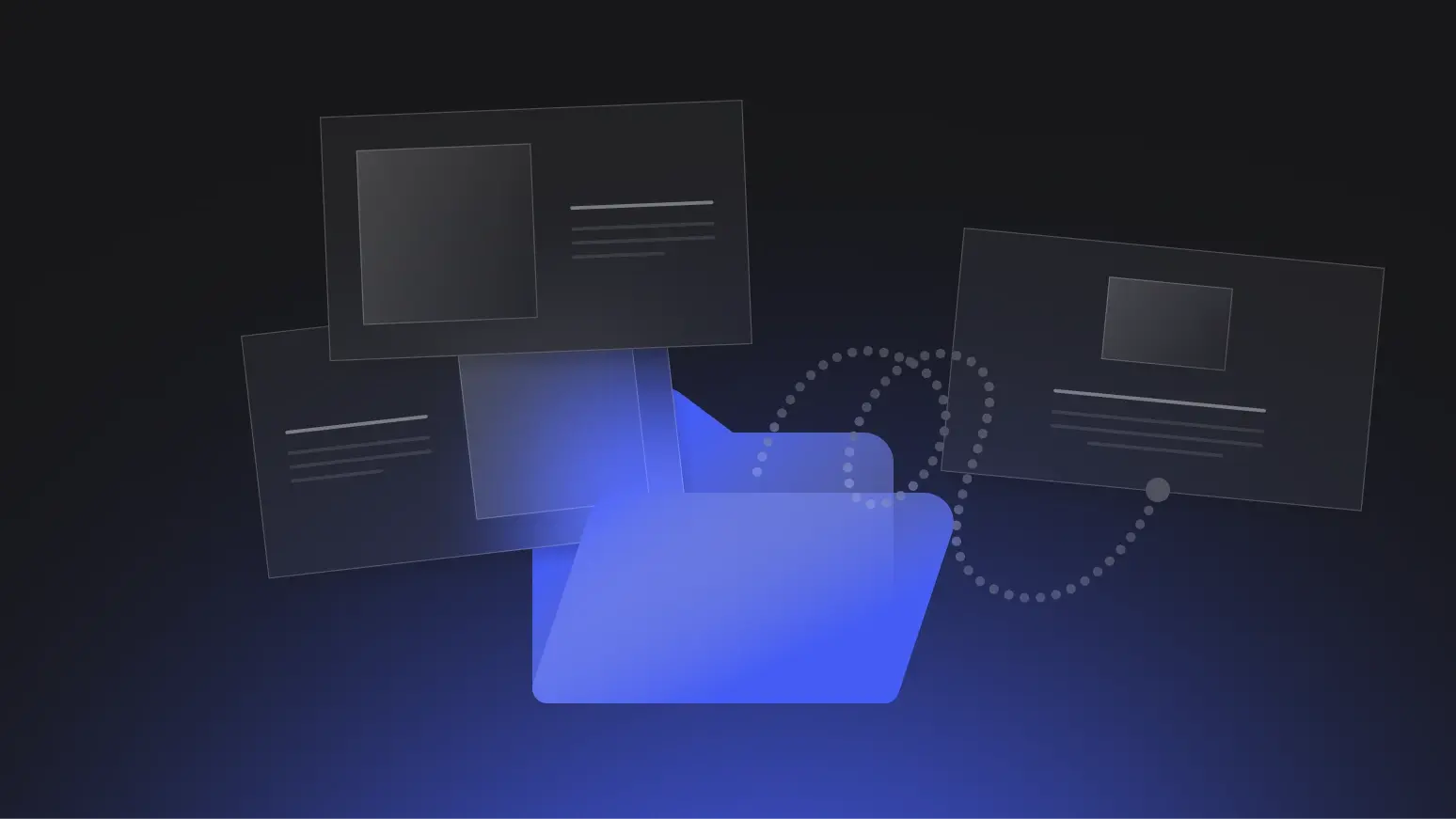
- Hero sections with 3 or 4 layout variations.
- Content blocks in different configurations.
- Social proof modules for testimonials, logos, and stats.
- CTA sections that can drop into any page.
- Form layouts for different conversion points.
- Card designs for case studies, team members, and blog posts.
When your Webflow development team builds with components, launching a new landing page takes faster. This is important for B2B companies. When a new product feature launches or a sales team needs a campaign page, they shouldn't have to wait three weeks for design and development.
Build trust across your B2B website with social proof
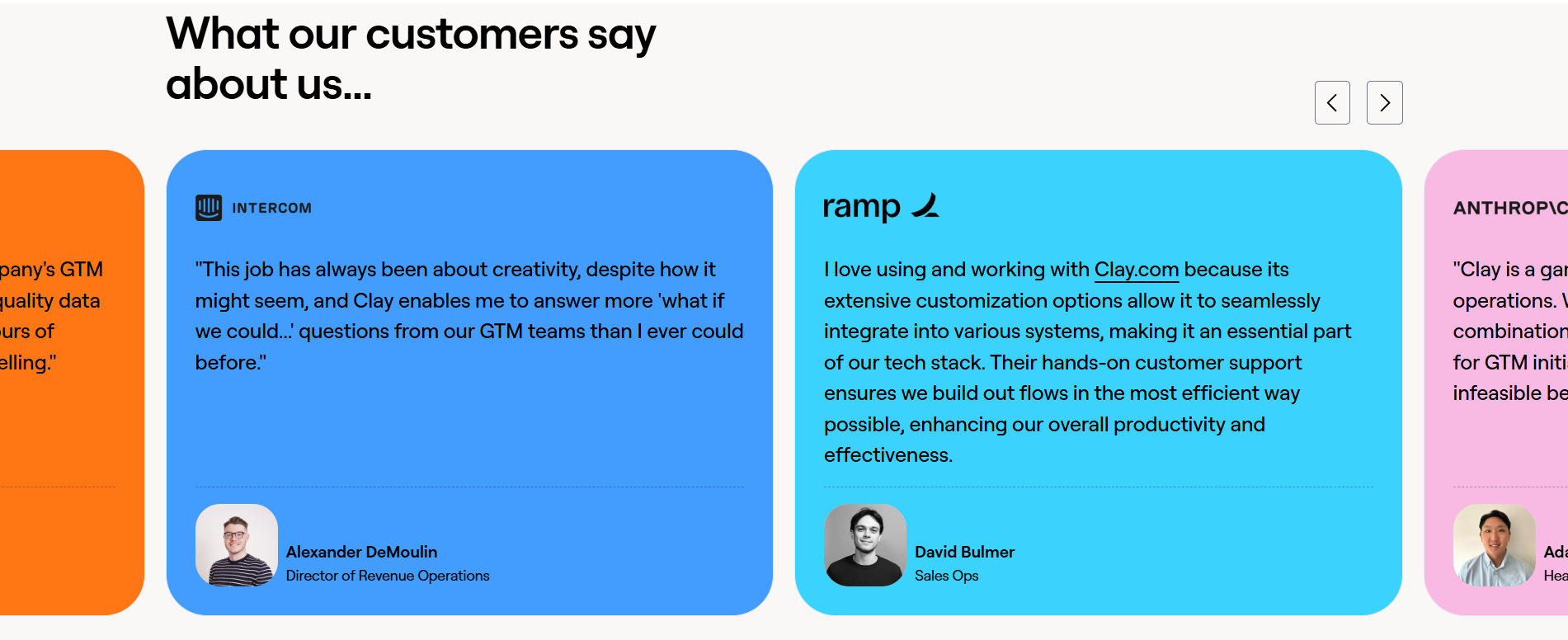
The biggest mistake B2B websites make with social proof is treating it as a single section at the bottom of the homepage. Social proof should appear throughout your entire site. Client logos, security badges, and partnership certifications should be visible without scrolling on your homepage and key landing pages. Place them contextually where it's most persuasive:
Clay provides a strong example of how testimonials can function as credibility infrastructure. Recognizable logos, real customer names, and defined roles turn social proof into structured authority signals. This type of attributed validation strengthens trust for buyers and increases confidence for AI systems deciding which brands to recommend.
The 3Ps of high-converting B2B CTAs
A "Contact Us" button hiding in the corner is not a strategic design. The best-performing CTAs follow three principles:
- Prominence. Visible without scrolling. High contrast. Repeat it after major content sections.
- Promise. Every CTA tells visitors what they get. For example, "Get a free website audit" is a promise. The more specific the value, the higher the click rate.
- Proof. Place evidence near your CTAs. A stat like “176% more conversions” + “Case Study” button. Proof removes the last bit of hesitation.
Phase 5: B2B website launch and continuous optimization
Launching is not the finish line, but the starting point. The best B2B websites get better over time because the team keeps optimising the structure, messaging, and conversion paths.
B2B website analytics and conversion tracking
Most B2B websites track pageviews and call it analytics. That's like checking whether people walked into your store without knowing if any of them bought something. What you need is:
Set up goal tracking for the things that matter. Form submissions, resource downloads, demo requests, key page visits, and CTA clicks. Then build a dashboard that shows you traffic sources, engagement metrics like scroll depth and time on page, conversion rates by channel, and technical performance including Core Web Vitals.
Continuous B2B website optimization after launch
Your B2B website is a product. It needs continuous attention, testing, and improvement.
What we've learned from building 100+ B2B websites
After doing this for years, we can sat that B2B websites that generate pipeline have a few things in common. They start with strategy. They prioritize what their users need over what their CEO likes. They measure constantly and iterate based on data. And they treat the website as a living product that gets better every month.
Your B2B website is not competing with your direct competitors' websites. It's competing with the best digital experience your prospects have ever had. Their expectations were set by the smoothest checkout flow, the clearest product page, the fastest-loading site they've used this week.
That’s a high bar. It’s also the opportunity. Most B2B websites are still mediocre, which means a great one stands out fast. With the right web development and design partner, this is where you can pull ahead.
What's next?
We've used this process for Quarterhill, which delivered 120% more organic traffic, or for Callstack, which drove a 176% lift in conversions and 65.7% more organic traffic.
Want to see how this applies to your site? Book a free strategy session and we'll walk through where you're losing leads and what to fix.
Not ready yet? Browse our case studies or pick one section from this guide, apply it, and measure the difference.