



















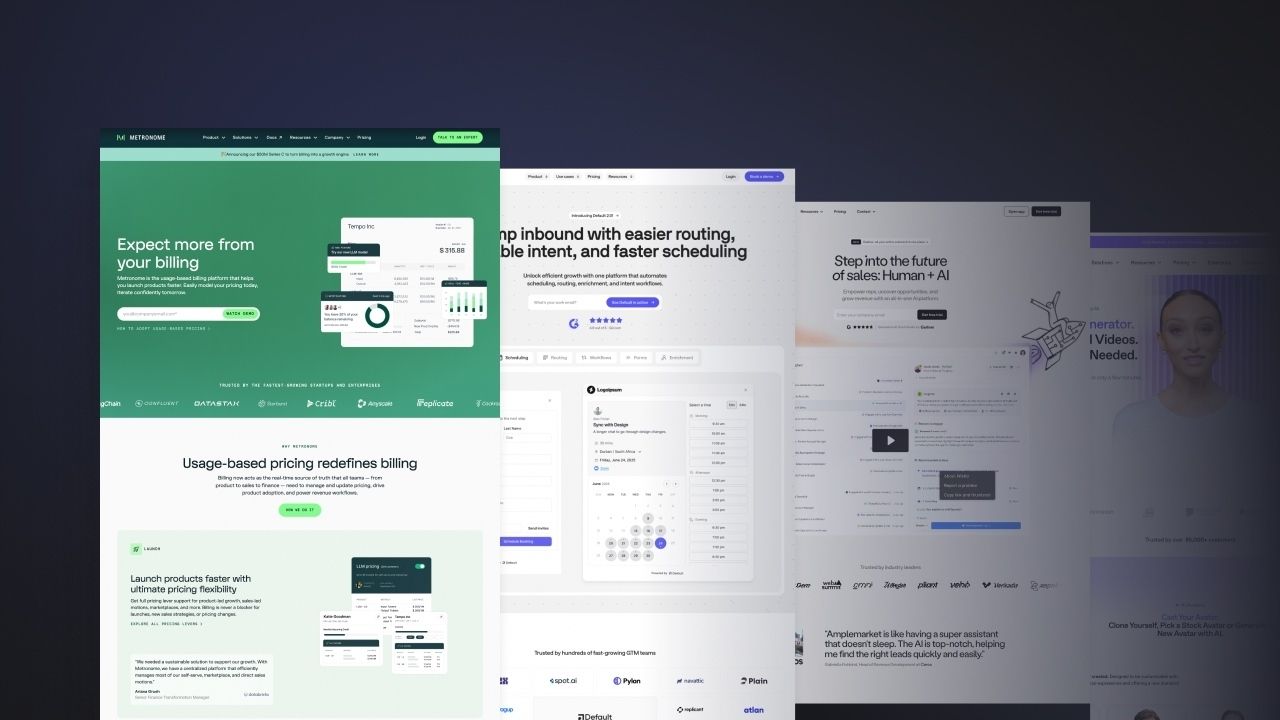







Picking a stack isn't really about the homepage. It's about what happens after launch - who updates the site, how often, and whether AI is part of the workflow.
Framer vs Webflow vs Astro + Sanity: which website stack should you choose?
This question comes up in almost every sales call we have.
A team is planning a new site or a rebuild, and someone asks: "which stack should we pick?"
The answer depends less on the homepage and more on what happens after launch. Who updates the site? How often do you ship new pages? How much content do you manage? Do you want AI to help your team move faster, or is the whole workflow still click, edit, publish?
Here's the short version.
Quick answer
- Framer if design is the whole point and you're shipping a landing page or a small marketing site, fast.
- Webflow if your team is non-technical, doesn't use AI coding tools, and wants a visual editor to own the site day-to-day.
- Astro + Sanity if your team is technical or AI-native, and the site is a serious marketing property you plan to scale.
That covers most teams. Below is why.
At a glance
What is Framer
Framer is a visual website builder made for fast, design-led pages. It's popular with startups, designers, and teams that need a sharp landing page quickly. The core experience is simple: move fast, polish the layout, publish.
What is Webflow
Webflow is a visual website platform with a mature CMS. Marketing teams, agencies, and startups use it to design, build, edit, and publish websites in one place. It's visual, but it also gives teams a proper CMS for blogs, case studies, and other repeatable content.
What is Astro + Sanity
Astro + Sanity is a more custom setup. Astro is the website foundation. Sanity is the content workspace, where your team manages structured content. In 2026, this stack is often rounded out by an AI coding assistant like Claude Code or Cursor.
This is not the simplest option. Components need to be reusable. The design system needs to be clear. Content needs structure. AI needs rules, not vibes. When those foundations are in place, this stack can do what Framer and Webflow cannot: create a new landing page from a brief, reuse approved components, pull from existing content, and ship something that doesn't look like it was assembled during a fire drill.
How they compare
Who updates the site after launch. Framer works well when a designer or design-minded marketer owns the page. Webflow is easier for a broader marketing team because the CMS and visual editor are mature. Astro + Sanity can also be marketer-friendly, but only if the content model and page system are designed well up front.
Speed to launch and iterate. Framer is still the fastest for a single landing page or small brand site. For a full marketing site, the calculation has flipped in the past year. Webflow used to be faster than custom code. With Astro + Sanity and a mature MCP integration, AI coding assistants now do real work on the site, which makes both the initial build and ongoing iteration faster than Webflow for teams that know how to prompt. The first page is not the point. The twentieth page is. Webflow has an MCP too, but it operates inside a more closed system and can do less. We covered the full comparison in this LinkedIn post.
Content and CMS. Framer can handle simple content, but it's not the first choice when content operations become serious. Webflow has a mature visual CMS that marketing teams learn quickly, but it has real structural limits: field caps per collection, limited reference depth, and a steady stream of new features gated to the enterprise tier. You're also tied to Webflow's release schedule when you need something new. Sanity is more flexible across the board. You define your own fields, your own content models, your own structures, and you don't wait on a platform roadmap.
How AI fits in. Framer and Webflow are both adding AI features, and they work inside their own platforms. Astro + Sanity gives AI assistants more room to work, because the website structure, components, copy rules, and content model can live in a readable system. This is also where more advanced workflows become possible: a design system encoded as a Claude Code skill, specialist agents for copy and visuals, analytics feedback loops that propose and ship tests. AI does not magically build a good website. The ceiling is higher if the foundations are clean.
Platform dependence. On Framer and Webflow, you're tied to one platform's uptime, release schedule, and pricing. When Webflow has an outage, your site is down until they fix it, and there's nothing your team can do about it. Astro + Sanity lives in your own GitHub repo and your own hosting setup. You can switch hosts, repoint DNS, or migrate off the CMS with your content intact. The tradeoff is that you're responsible for the setup. The upside is that you're never stuck.
Complexity ceiling. Framer is great until the site needs deeper systems and lots of content. Webflow can carry a serious marketing site for a long time, especially with reusable components. Astro + Sanity has no real ceiling. With a clean component system and a well-defined design system, it can be as ambitious as you want it to be. The flip side is responsibility. Without clear rules, you just get a custom mess. Very artisanal, very expensive.
Three use cases
- Your core team is designers and the site is on the smaller side (a brand site, a portfolio-style marketing page, a focused landing): Framer.
- Your marketing team is non-technical and wants to make every change by clicking in a visual interface, without AI tools in the workflow: Webflow.
- You're running performance marketing with constant testing and a lot of new landing pages, and you want your team to iterate fast with AI coding assistants: Astro + Sanity.
Summary
Framer is for fast, design-led launches. Webflow is for non-technical marketing teams that don't use AI coding tools and want a visual editor to own the site day-to-day. Astro + Sanity is for technical or AI-native teams running serious marketing sites that need to scale.
Webflow is still good, but its default advantage is weaker than it used to be. Framer took the simple, design-led sites. Astro + Sanity now wins for more complex, fast-moving marketing sites that want AI assistance. Webflow still makes sense when the team is non-technical and wants everything inside one visual platform.
The better question isn't "which tool is best?" It's "how does our team actually work, and how will it work 18 months from now?" Answer that, and the right stack usually picks itself.