


























Learn the startup launch strategy used across 100+ B2B SaaS brands. Brand framework, messaging, landing page template, and a pre-launch marketing checklist for YC founders.
TL;DR
- Align positioning, visual identity, voice, messaging, and distribution before launch so buyers quickly understand your product, credibility, and differentiation.
- Use clear, compelling, credible messaging that leads with a buyer outcome, explains delivery, provides proof, differentiates the product, and offers one action.
- Ship a simple website within five to seven days, install analytics immediately, review behavior weekly, and test one focused change at a time.
- Prepare distribution before launch with a concise product video, mobile-ready landing page, founder-led LinkedIn activity, targeted press outreach, and authentic scarcity.
What a YC startup launch strategy looks like
Most YC founders approach launch as a production deadline. Get the page live, queue the LinkedIn post, send the newsletter to a list that's too small, and measure results against expectations that were never grounded in a plan.
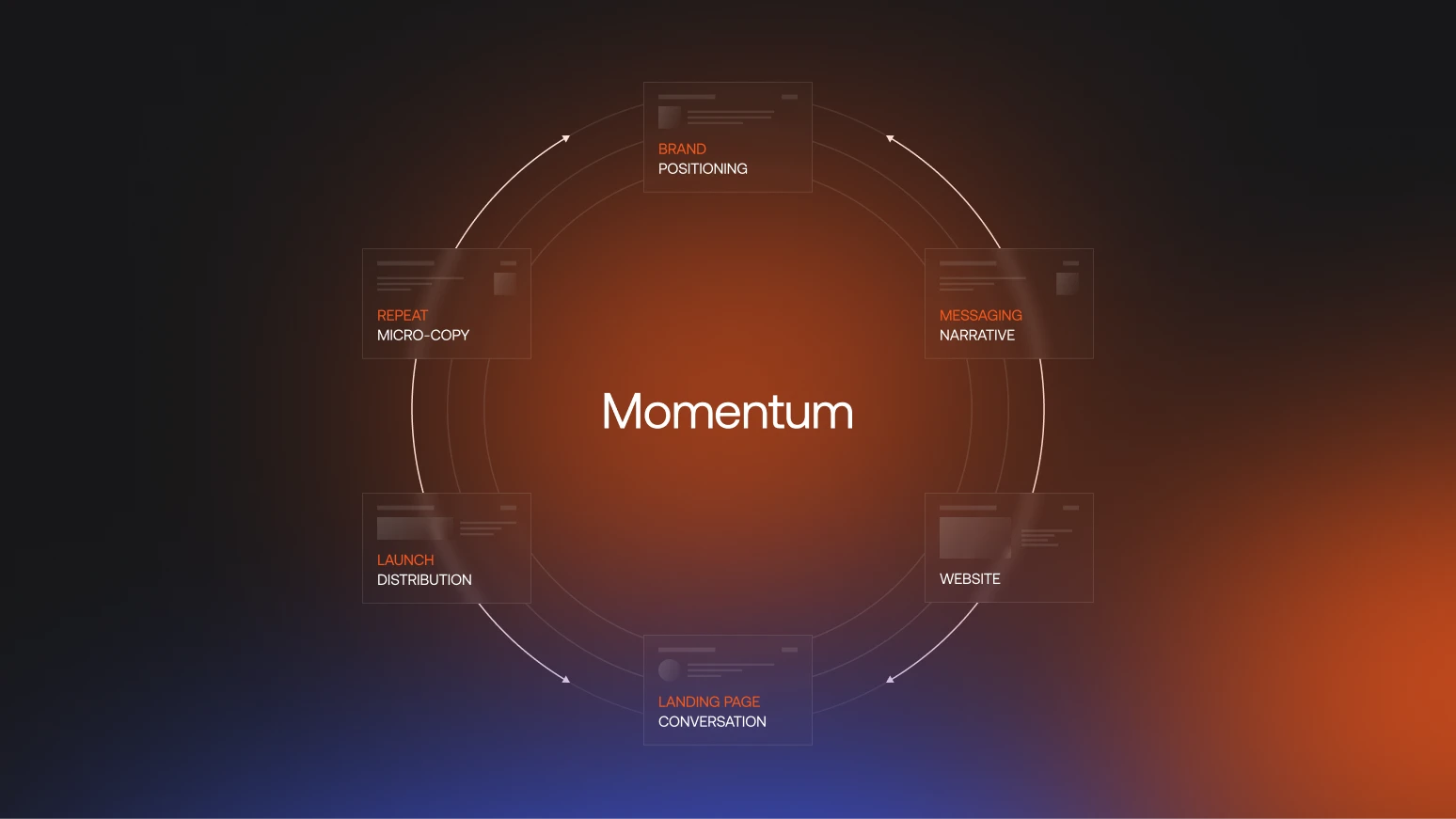
The issue is rarely execution. It's that brand, messaging, and distribution were never aligned around a single positioning foundation, so every channel still can't articulate what you do or why it matters. That's where traction leaks.
When your positioning is consistent across every channel, buyers don't need to figure out what you do by the third touchpoint. In the 100+ ****B2B tech launches we've worked on:
- two weeks of pre-launch prep produces 3-5x more traction than fixing things after go-live
- YC founders who aligned brand, messaging, and landing page before launch converted at twice the rate
This guide covers everything from brand foundation to launch execution, including a pre-launch marketing checklist built for YC-stage startups.
Your brand is the first thing B2B buyers judge
When 160+ companies launch in the same YC W26 window, all competing for the same pool of attention, brand is what makes people stop scrolling and pay attention.
Most founders treat branding as a checklist item. Pick colors, choose a font, grab a logo from Fiverr, and move on to the product. The problem is that B2B buyers, especially at the enterprise and mid-market level, use brand as a proxy for credibility. A poorly designed site doesn't just look bad, it signals that the company behind it might not be ready to handle their business. Here are the branding mistakes most YC founders make
First impressions are formed in under four seconds, and 94% of them are design-driven. In B2B, where buying decisions involve multiple stakeholders and months of evaluation, that judgment gets shared internally. Before you have had a single conversation with a prospect, someone on their team has already looked up your site and formed an opinion.
The 3-layer brand framework for YC startups
A 4-week branding project is not what is holding you back. What is missing is clarity in the places that shape how people see you, trust you, and buy from you.
Layer 1: Positioning
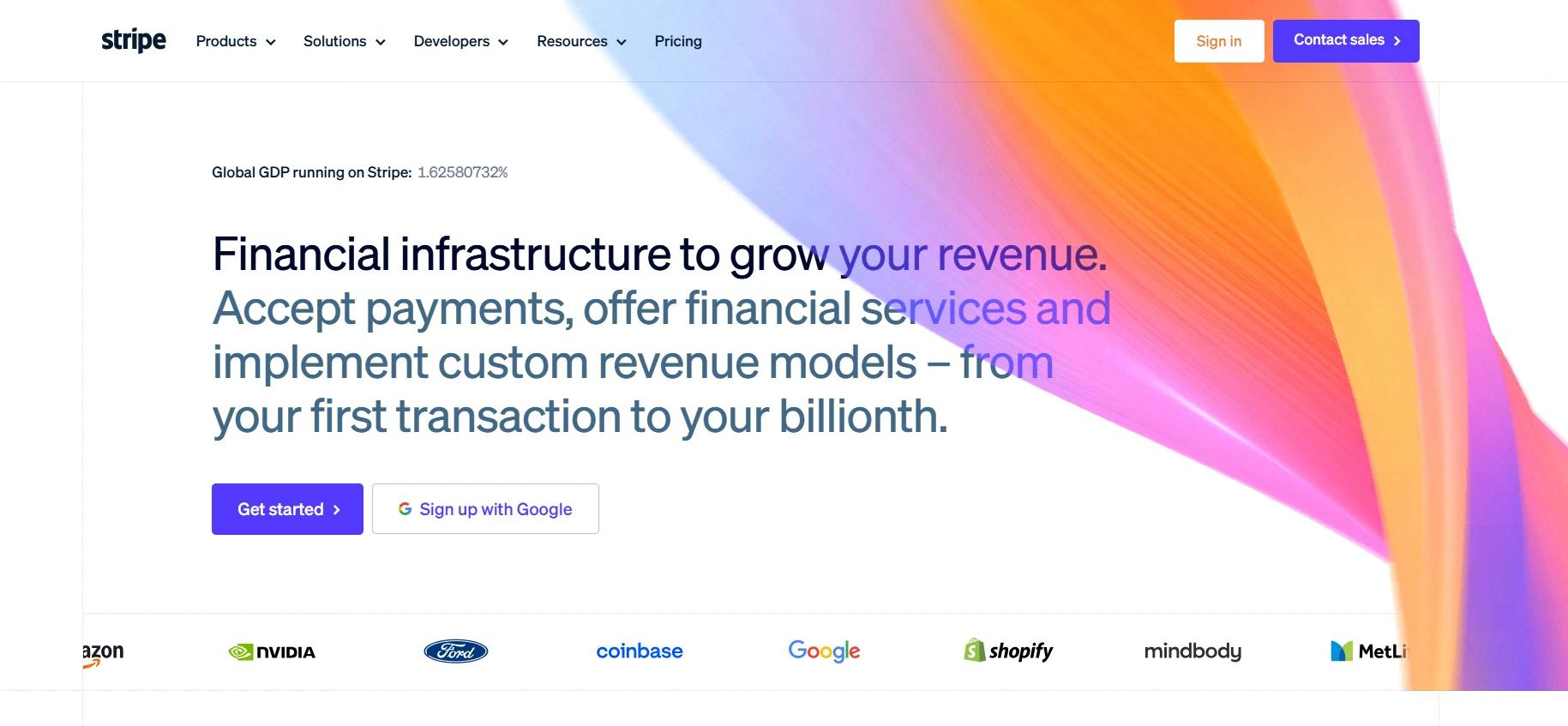
Who are you, who is it for, and why should they care? The best YC companies don't compete in existing categories. They name new ones. Stripe didn't say "we're a payment processor." They said "payments infrastructure for the internet." Your positioning statement should follow a simple structure: "We help [who] do [what] by [how], unlike [alternatives]."
Layer 2: Visual Identity
Be distinctive. Your visual system should be recognisable in a thumbnail, on Product Hunt, in a LinkedIn feed, in a tweet. You need a colour, a shape, and a visual style people instantly associate with your B2B brand. If you line up the top 10 competitors and they all blur together, that is exactly where your visual opportunity is. If you are launching soon and need a distinctive branding strategy that ships in days, that’s what we do.
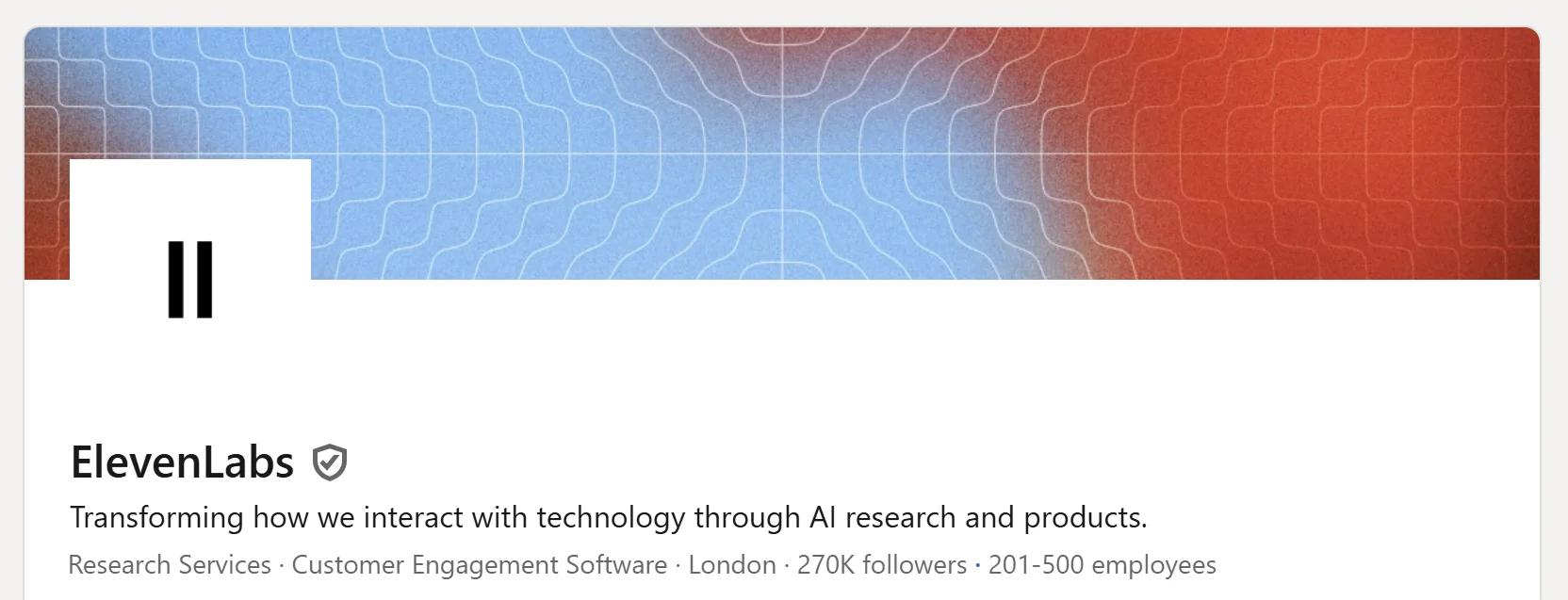
When you scroll through a LinkedIn feed full of AI tools, they all blur together. ElevenLabs doesn't. Their logo is two vertical lines, an abstraction of "11" that doubles as a pause button, the universal symbol for audio. Same mark, every context, never redesigned. That consistency is what built recognition faster than any rebrand could. This is what YC partners actually pay attention to.
Layer 3: Voice
How you sound across every touchpoint, from your hero headline to your error messages. Consistency builds familiarity,and familiarity builds trust. Start by defining three brand attributes, like: "Technical but approachable. Fast but thorough. Bold but not reckless."
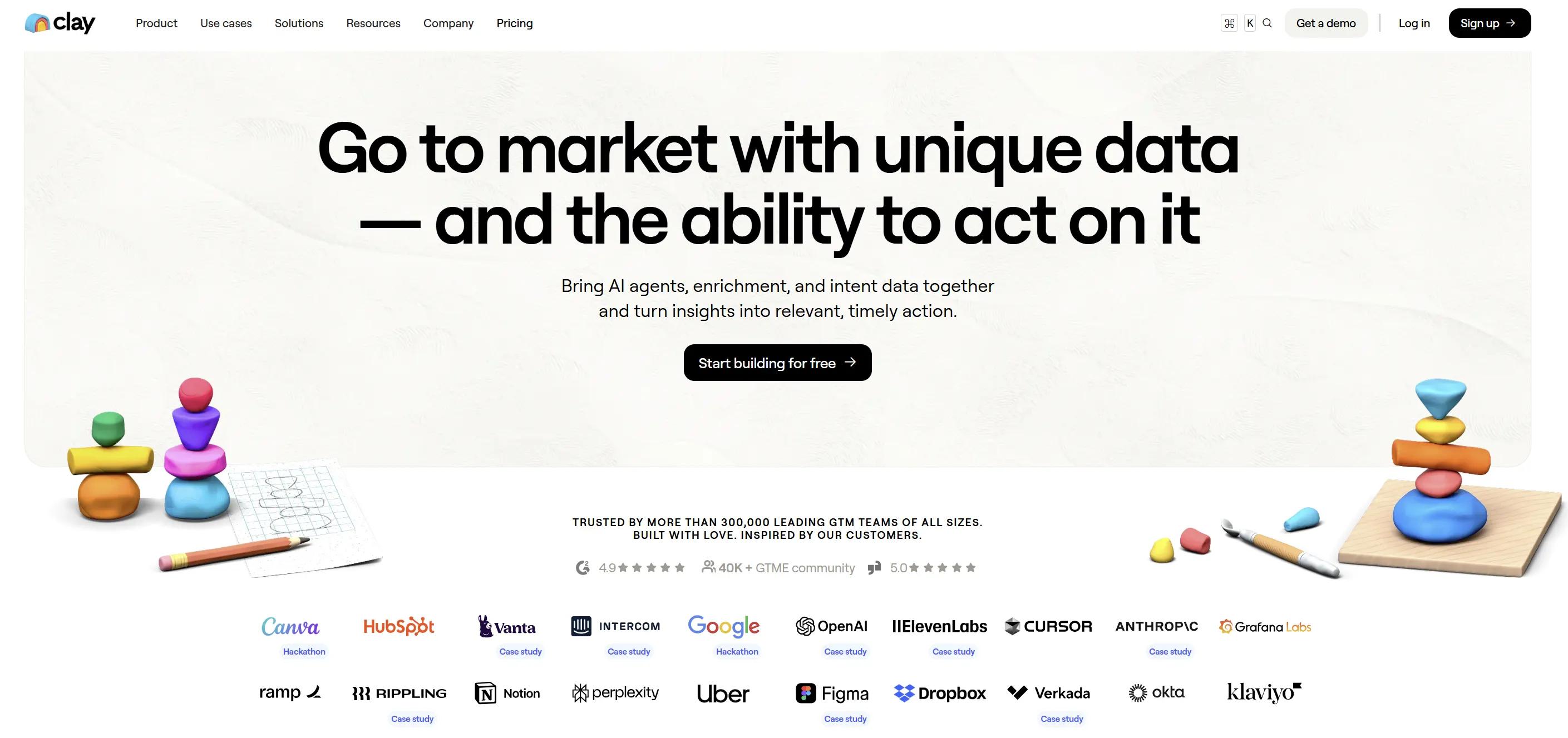
Look at Clay here. Same tone everywhere you find them. Homepage, changelog, job listings. Direct, no filler. You can reverse-engineer their brand attributes in about ten seconds without them ever publishing a style guide. That is what voice consistency actually does for a brand.
- Homepage hero: "Go to market with unique data - the ability to act on it"
- Product description: "Turn any growth idea into reality"
- Feature copy: "Stop waiting months to purchase and implement new data tools"
- Customer story intro: "Clay has become the orchestration layer for everything GTM"
The startup messaging that converts: clear, compelling, credible
73% of B2B websites fail to communicate what they do within five seconds. That means most of the budget you spend on ads, content, and launch campaigns is lost before visitors even understand your product.
Every piece of messaging, from your hero headline to your cold email subject line, should pass the 3C test.
1. Clear: can a stranger understand what you do in 5 seconds
The benchmark is simple. "We deliver groceries to your home in 30 minutes" beats "AI-based grocery needs optimization platform" every time. Show your headline to someone outside your industry and ask them to explain what you do after reading it once. If they hesitate, the message needs work.
2. Compelling: does your message create urgency
"Stop losing 40% of leads to slow follow-up" is compelling. "Automated lead management platform" is forgettable. The difference is that one describes a problem the buyer already feels, and the other describes a product category. When someone reads your headline, they should think "I need to fix this" within the first few seconds, not "I wonder what this does."
3. Credible: why should anyone believe you
Clarity and urgency get attention. Credibility is what converts it. Numbers, recognizable logos, and specific results give buyers a reason to trust what they are reading. "Trusted by 200+ teams," "$2M processed in the first 90 days," "Backed by Y Combinator." The test is simple. Would a skeptical CTO believe this claim without further evidence? If not, add proof.
What 3C looks like in practice?
Clay's homepage opens with seven words: "Go to market with unique data - the ability to act on it." No category jargon, no mention of funding. Just the outcome a buyer actually cares about. Scroll further and you find 5,000 customers listed by name: OpenAI, Ramp, Rippling, Anthropic. The page never asks you to trust them. It just shows you who already does.
The messaging hierarchy for your launch page
Every page, every ad, every pitch follows this structure, in this order:
If your messaging is clear but your website still isn't converting, the next bottleneck is usually conversion rate optimization. Small changes to copy and layout can compound fast.
Ship your startup website in a week, then iterate every week after
Your website is not a one-time project. It's the one employee that works 24/7, in every timezone, talking to every lead. The founders who win don't launch a perfect website. They ship v1 with analytics fastand iterate weekly based on data.
Step 1: Ship v1 in 5-7 days
Before PMF, keep the website simple. Make the message clear, give people one CTA, and add social proof if you have it. You do not need animations or a blog to launch. Get it live, learn from it, and improve later.
Step 2: Set up tracking from day 1
As soon as the site goes live, you should be able to see what people are doing on it. That means having tools like PostHog, Hotjar, or GA4 in place from the start to track those metric:
Step 3: Review weekly
Every Monday, look at where people drop off, what they click on most, and where they get frustrated. Treat it like a weekly check in for your website.
Step 4: Run experiments
Change one thing each week. Test a new headline, tweak the CTA, adjust the hero, move the social proof. Let it run for a few days, see what works, and keep the winner. Then do it again the next week.
Step 5: Expand with data
Only add new pages when there is a clear reason for them. Let the data show you what people want next. Do not build pages “just in case". Every page should serve a real purpose and have a job you can measure.
How ongoing website iteration helped Callstack increased conversions
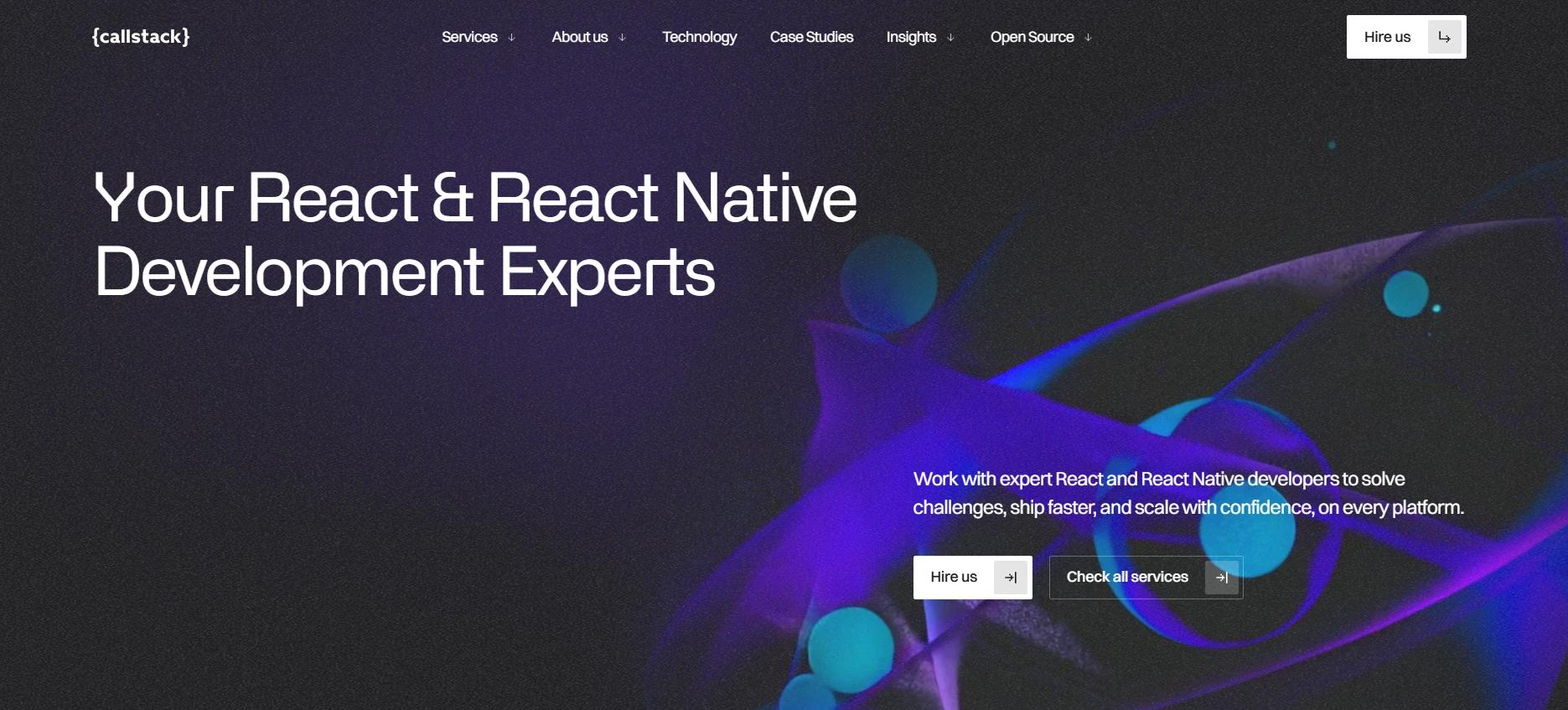
We worked with Callstack on a website redesign and continued to improve it over several months. Instead of treating the site as a one off project, we kept testing, reviewing the data, and making regular updates. That approach led to a +176% in conversion rate. One of the strongest wins came from moving social proof above the fold, which increased hero CTA clicks by 43%.
The top-performing B2B SaaS landing page template
After building 100+ B2B landing pages, we have seen what tends to work and what gets in the way. The highest converting pages usually follow a clear structure, where every section earns its place. Take one away and the story breaks. Add too many, and the page loses focus.
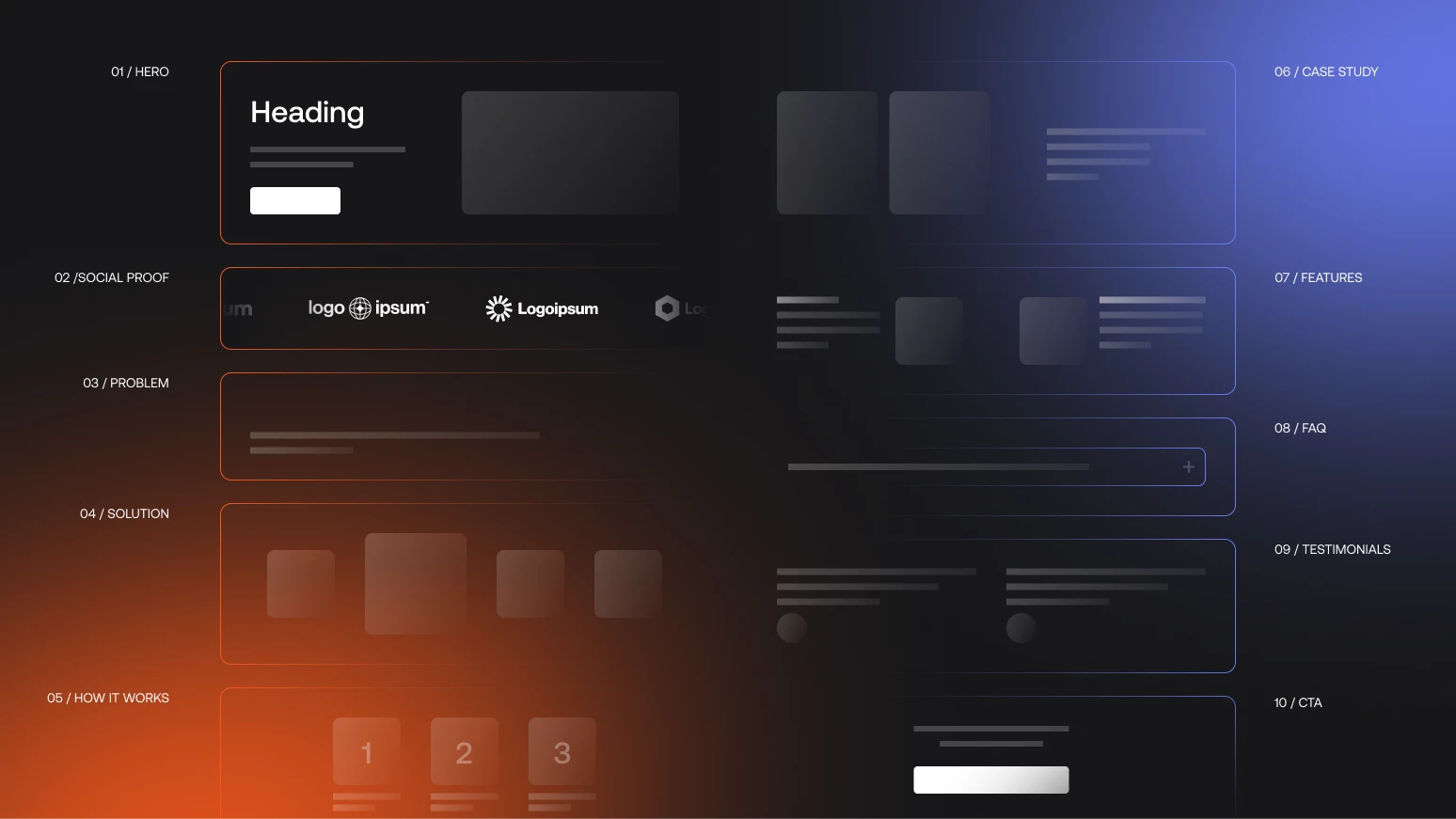
The 10 section landing page structure for B2B SaaS
YC partners have actually evaluated startup websites, and we broke that down here. The best B2B SaaS landing pages follow that same logic. They keep the structure clear, the message focused, and the reader moving toward one action. It is also the approach our expert Webflow team uses when building landing pages for companies that need to launch fast.
The pre-launch marketing checklist for YC startups
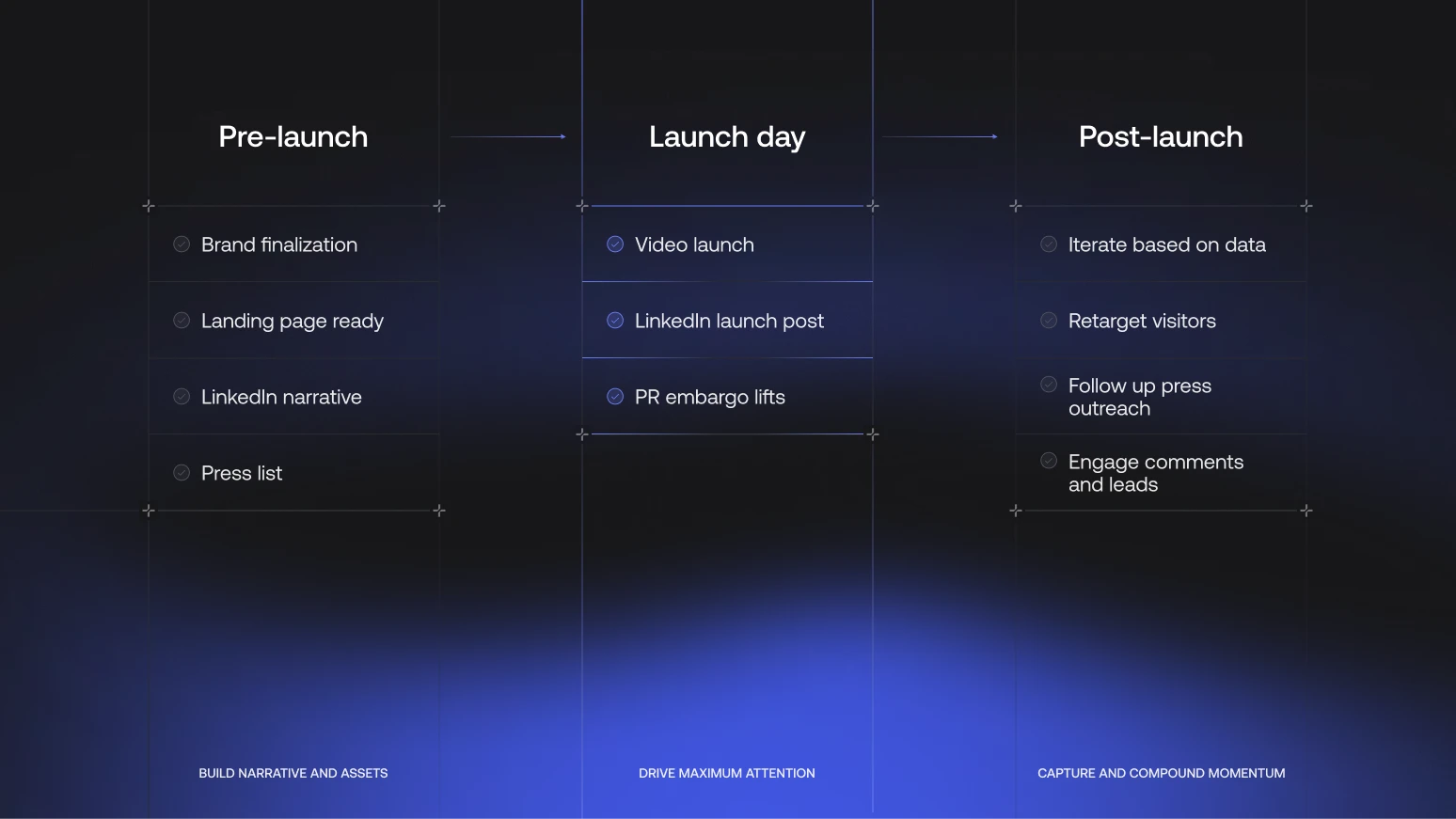
1. What your launch video needs to do in 60 seconds
Your launch video shows up everywhere. Product Hunt, LinkedIn, pitch decks, email campaigns. It is often the first impression someone gets of your company.
Founder narration beats a corporate voiceover every time. Captions are non-negotiable since 85% of social video is watched on mute. Your first three seconds are your entire hook window.
2. What your landing page needs before go-live
Every channel sends people to your landing page. Make sure it is ready before a single visitor arrives:
3. How to run LinkedIn in the weeks before launch
Start two weeks before launch. The founder's personal account outperforms the company page.Carousels get three times more engagement than text posts.
On launch day, reply to every comment in the first two hours. LinkedIn rewards early engagement.
4. How to earn PR coverage before you launch
Build your press list three weeks out. Identify twenty to thirty journalists who cover your space and engage with their work before you pitch.
5. Lead magnets and scarcity tactics that drive pre-launch signups
Scarcity works in B2B when it reflects reality, not manufactured pressure. A lead magnet compounds that by giving buyers a reason to engage before they are ready to sign up.
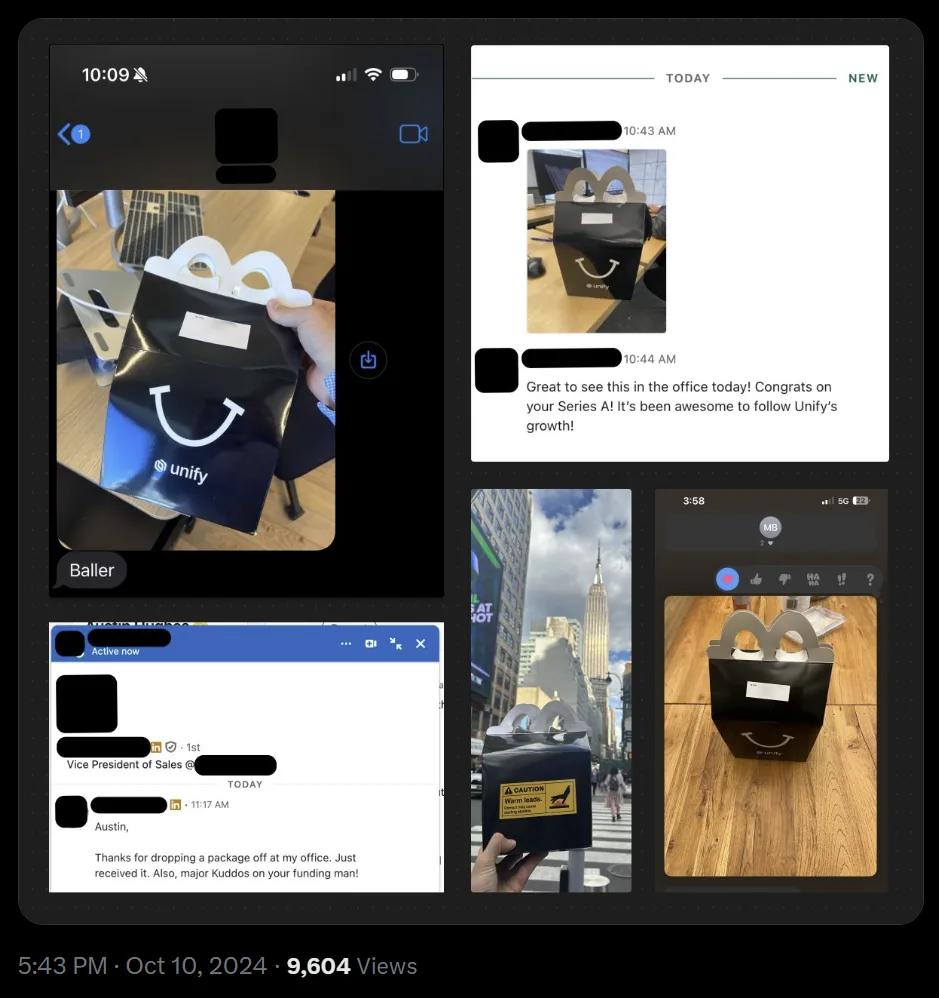
Unify's approach to pre-launch is worth borrowing. In the weeks before their product launch, instead of a generic waitlist, they sent branded "Happy Meal" boxes packed with cookies and an apron to prospects, customers, and investors. It sounds simple. It generated conversations that a standard announcement email wouldn't have.
Most of the YC startups we work with go from brief to live in 4 weeks
If you are building toward a YC launch, the window to get your brand, messaging, and landing page right is shorter than most founders expect. We have worked with YC-backed startups at exactly this stage, and the ones that come in prepared consistently see better traction from day one. Book a free strategy session to walk through your launch plan with our team, or browse our case studies to see how we helped EigenPal, Pocket, Jace and others go from brief to live in four weeks.